
By Dr. Jacqueline Gu, DC
Spending long hours at a desk might seem harmless, but it can take a serious toll on your body. Many office workers today experience headaches, neck stiffness, back pain, and even eye strain. These problems are not usually caused by one bad day at the office but by the cumulative effects of poor posture, repetitive strain, and static work positions over time.
 Unlike dynamic jobs that involve frequent movement, office work often requires sitting in the same position for extended periods—typing, answering emails, or participating in virtual meetings. Prolonged sitting and repetitive movements can lead to microtrauma in muscles and joints, resulting in inflammation, tension, and eventually pain.
The good news: most of these aches and pains are preventable. The key is creating an ergonomic workspace, paying attention to your body mechanics, and building healthy habits into your workday.
Factors That Influence Comfort and Productivity
- Lighting. Over 80% of the information we process comes through our eyes. Poor lighting or glare from windows and screens can cause eye strain, headaches, and postural compensation (like leaning forward or twisting to avoid reflections). Use blinds or curtains to control natural light and position screens perpendicular to windows to reduce glare. Also, choose neutral, indirect lighting to minimize contrast between the screen and the room. You may want to consider blue-light filters or glasses if you work long hours at a computer.
- Screen Setup. Modern work relies heavily on digital screens, and improper setup is a leading cause of neck and back discomfort. It helps to keep the top of your monitor at or just below eye level and to maintain 20–28 inches (about arm’s length) between your eyes and the screen. Have you heard of the 20-20-20 rule? Every 20 minutes, look at something 20 feet away for 20 seconds to reduce eye strain. Consider using a document holder to avoid constant neck flexion when referencing papers.
- Temperature and Air Quality. Workplace comfort is strongly influenced by temperature and ventilation. Cold drafts can cause muscles to tense, while overheating leads to fatigue. Consider keeping room temperature between 20–24°C (68–75°F), which research shows is optimal for comfort and productivity, and ensure proper airflow without direct drafts from vents. Don’t forget to take short movement breaks to increase circulation if you feel stiff.
- Social Environment. A healthy work culture reduces stress and indirectly prevents physical tension. Encourage open communication with colleagues and supervisors. Also, take short breaks with coworkers to reset both mentally and physically.
Your Ergonomic Workspace Checklist
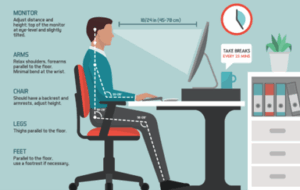
- Chair: Choose one with lumbar support, adjustable height, and the ability to swivel. Sit with your hips slightly above your knees, and keep both feet flat on the floor (or on a footrest if needed).
- Desk: Set your desk height so your elbows remain at 90–100 degrees when typing. Wrists should stay in a neutral (straight) position.
- Keyboard & Mouse: Place them close enough to avoid reaching. Consider ergonomic keyboards or vertical mice if you experience wrist pain.
- Underdesk Foot Rest: If your feet do not reach or are not fully flat on the floor, consider using a foot rest under your desk
- Monitor: Place directly in front of you, not off to the side, to avoid constant neck rotation.
- Phone: Use a headset or speakerphone—never hold the phone between your ear and shoulder.
- Clutter: Keep frequently used items within easy reach to prevent awkward twisting or bending
Movement and Breaks
Even the best-designed workstation can’t make up for sitting too long. Sedentary behavior is now recognized as a health risk on its own, associated with musculoskeletal problems, cardiovascular disease, and reduced mental focus. It help to take a microbreak every 30–60 minutes, whether that’s standing, stretching, or walking for 1–2 minutes. Another strategy is to incorporate gentle stretches for the neck, shoulders, and back during the day. If possible, alternate between sitting and standing with a height-adjustable desk. Also, get yourself out for at least 150 minutes of moderate exercise per week.
Office work doesn’t have to be a pain in the neck—or back
By creating an ergonomic environment, moving regularly, and prioritizing your health, you can prevent many of the common aches associated with desk jobs. Your workspace should support you rather than strain you. Get the right setup and habits, and you’ll work more comfortably, productively, and sustainably.
Unsure whether your setup is helping or hurting or if pain persists despite these adjustments? Come see us at MaxFit Movement Institute for a personalized ergonomic and posture assessment! We’re here to support you on your health journey.
Tags: comfort, ergonomics, office work, productivity
Add Comment